Staying on top of fast-moving news events
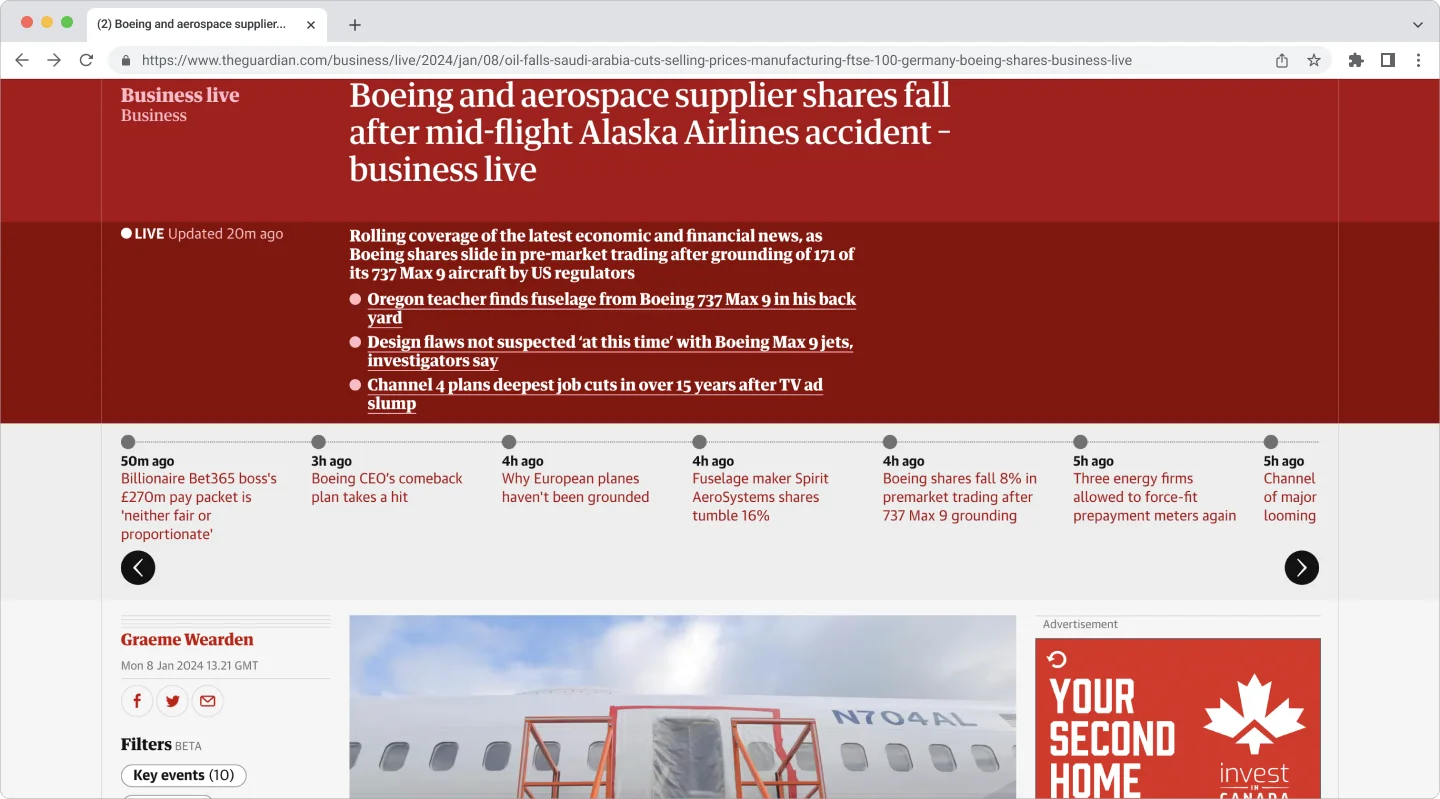
Live blogs are an integral part of the Guardian's journalism. They are a great way to capture peoples' attention and report on unfolding events.
Live blogs were originally called "minute-by-minute" and enabled the sports desk to cover the latest developments in a game or match. The tooling evolved and was adopted by other areas in Editorial. The news desk began producing live blogs in 2008, which rapidly gained popularity due to their ability to provide better coverage of hearings such as the 2009 Iraq war inquiry.
As the UX lead for Journalism, I worked with a cross-functional team to find innovative ways of making them more useful for both readers and editorial.
Research: Understanding user pain points
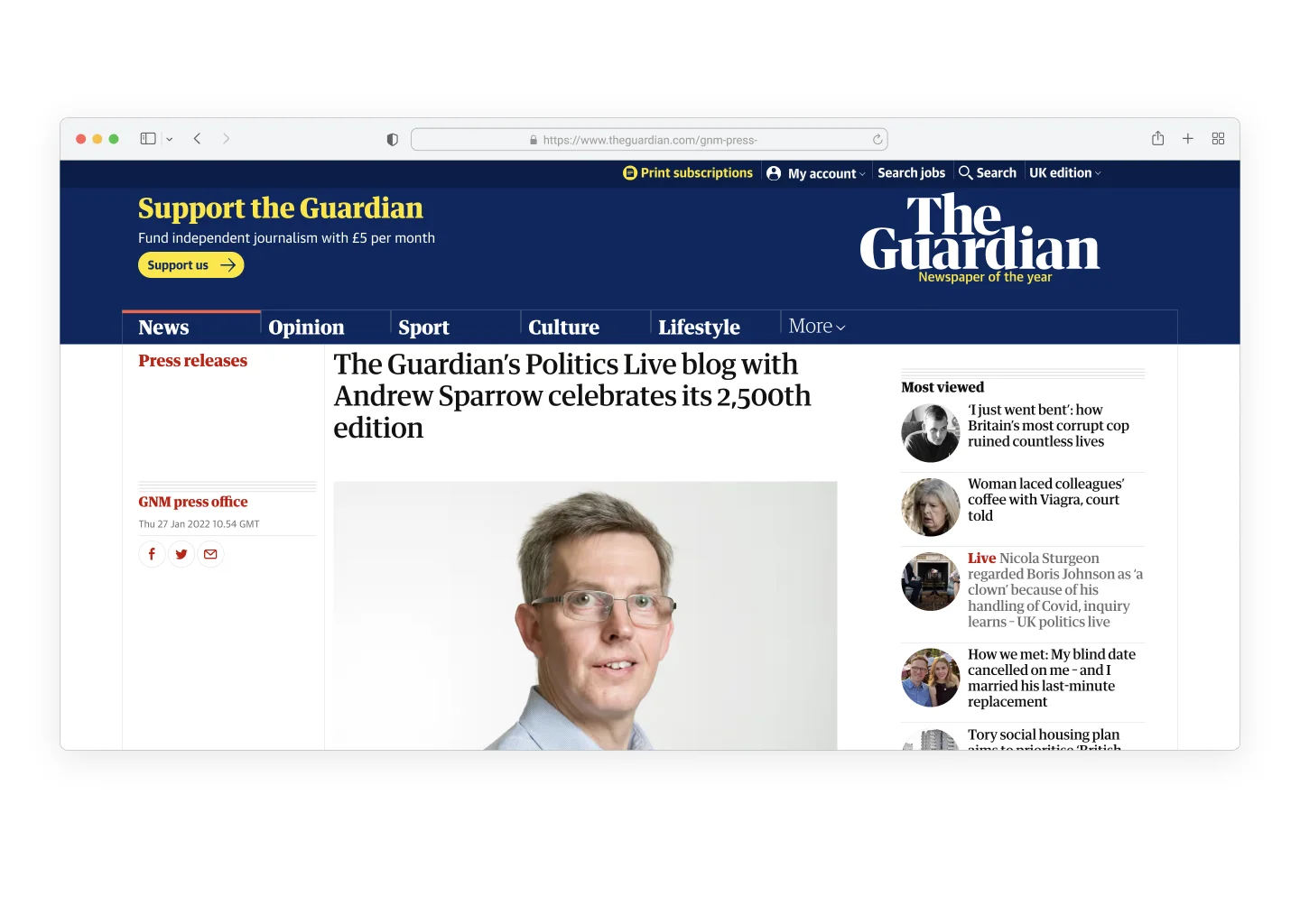
The Journalism Dev team was established to enable collaboration between editorial and design/development teams. Live blogs emerged as a top editorial priority after reader research revealed their importance for navigating complex news stories. The Politics live blog demonstrated significant impact with 2,500 editions and 1 billion page views, making it the focus for this pilot project.
Key user pain points identified:
- Orientation issues: Users reported difficulty understanding where they were in the stream when arriving late - "difficult to understand where I was in the stream of posts if I was late to it"
- Content overload: Readers felt overwhelmed by information density - "you are just hit with this huge block of information at the top"
- Scanability challenges: Users struggled to quickly identify new information and understand event sequences - "trying to find a way to quickly see the order of events"
These insights formed the foundation for our feature development approach.
Collaborative design approach
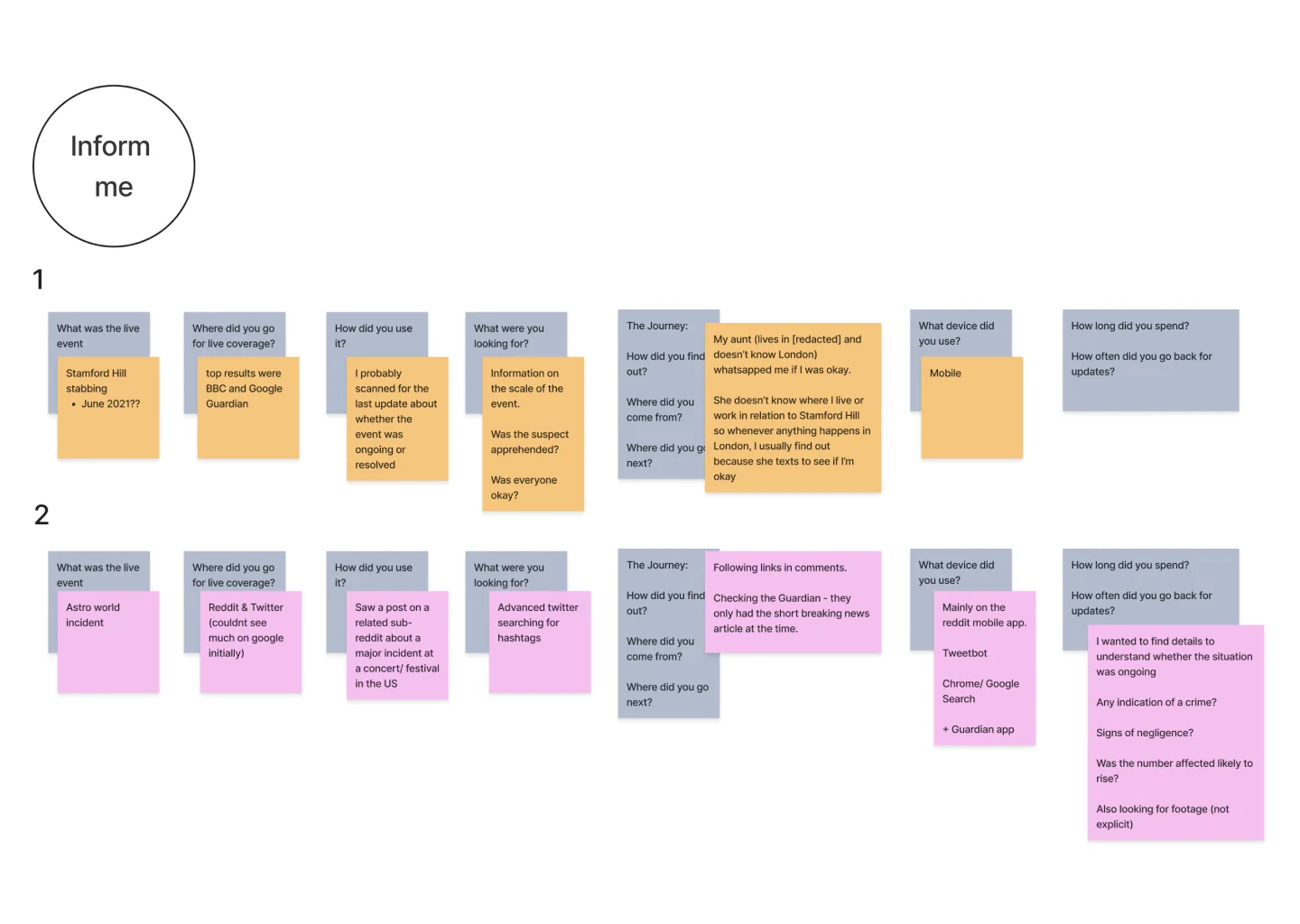
Rather than rigid workshop formats, we created flexible jam sessions emphasizing conceptual and strategic thinking. The team shared ideas through diverse formats - sketches, long-form text, screenshots, and reference links - using a scrapbook methodology that focused on core concepts and rationale over polished designs.
Design progression:
- Sketching: Captured ideas with flexible exploration
- Wireframing: Explored states with engineers to identify edge cases
- Prototyping: Enabled rapid user validation
- Proof of Concepts: Used code to display dynamic content for stakeholder discussions
This approach ensured engineers were involved early to identify technical constraints while maintaining creative exploration.
Key feature: Pinned posts for orientation
Problem: Readers felt disconnected between headlines and initial content in fast-moving stories.
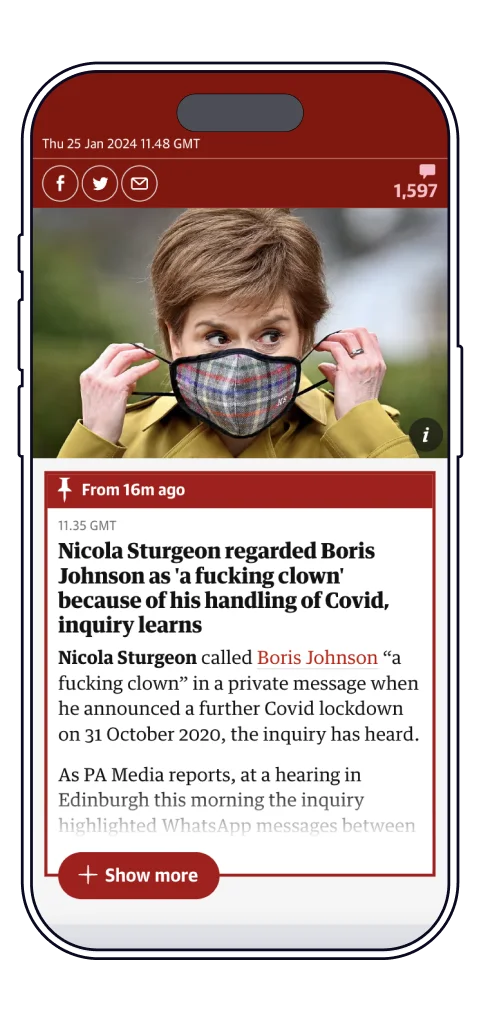
Solution: A pinned post at the page top provides immediate access to the most recent significant developments, improving orientation for new visitors. This feature addresses the disconnect users experienced when arriving late to a developing story, giving them instant context about the current state of events.
The pinned post remains visible as users scroll, ensuring they always have access to the most critical information regardless of where they are in the live blog timeline.
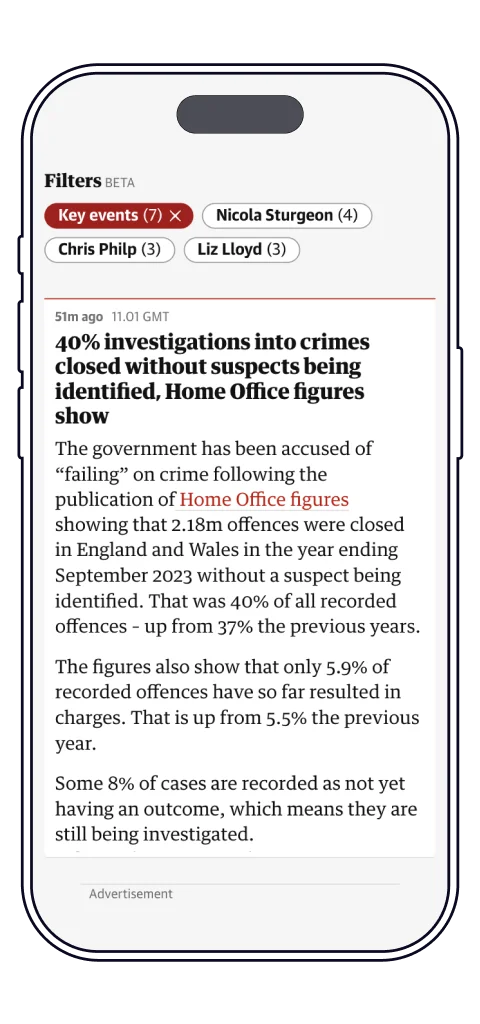
Smart filtering with Named Entity Recognition
Problem: Information overload from high content volume in major news events.
Solution: Implemented Named Entity Recognition (NER) technology to automatically tag post-level entities. This enables readers to filter by specific topics - such as local areas in election coverage - reducing cognitive burden and allowing focused reading.
The automated tagging removed editorial overhead while providing powerful navigation capabilities. Users can quickly filter to see only content relevant to their interests, whether that's a specific politician, location, or topic within a broader news event.
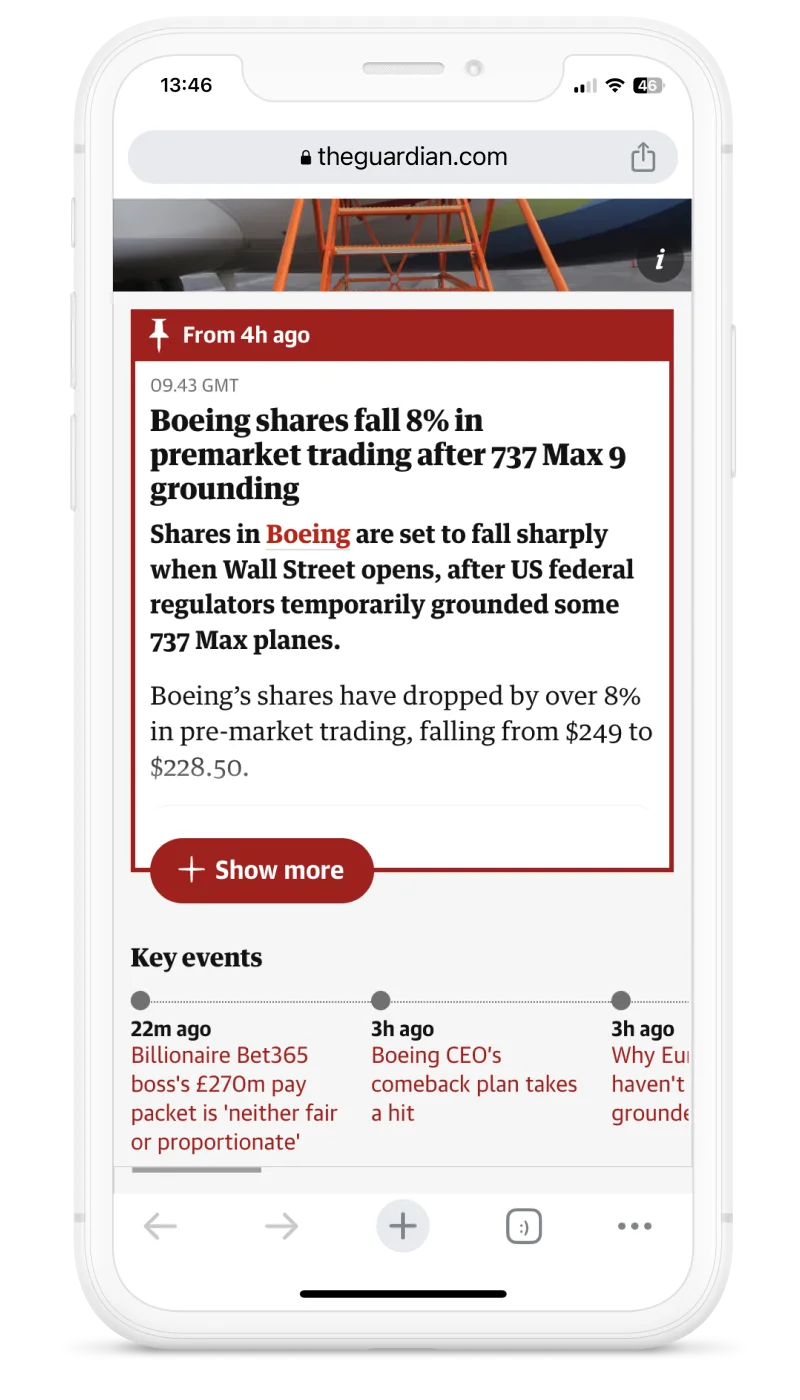
Timeline of key events
Problem: Identifying key plot points in dense narratives requires substantial effort.
Solution: A timeline displaying key events and summaries allows visitors to quickly grasp story progression, identify major developments, and jump to relevant sections. This feature transforms the linear stream of updates into a navigable narrative structure.
The timeline provides both overview and access - users can see the arc of the story at a glance, then dive into specific moments that matter to them. This addresses the scanability challenges identified in our research.
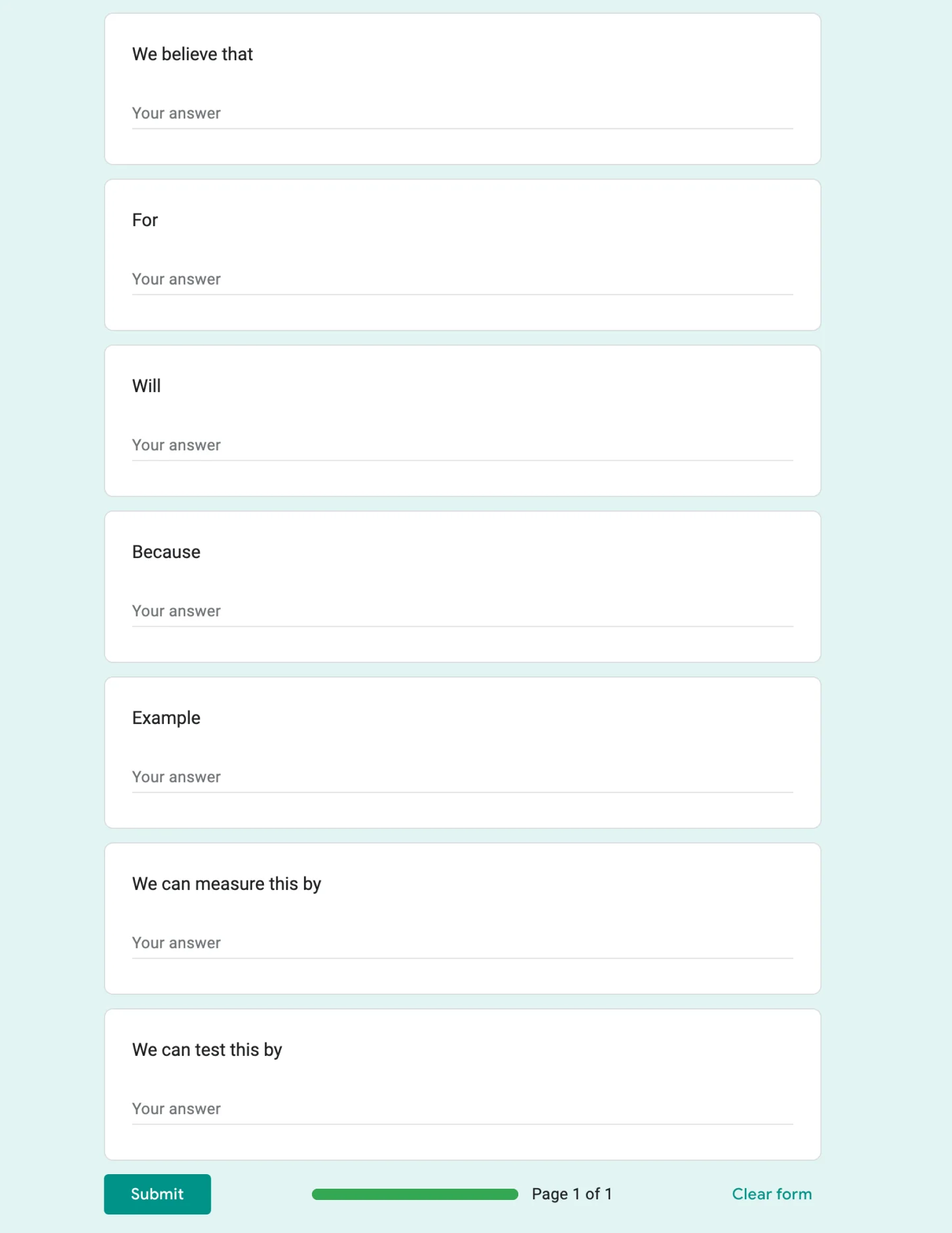
Testing strategy for unpredictable news cycles
Navigating the unpredictability of news cycles presented A/B testing challenges. Instead of relying solely on traditional testing, we implemented a multi-faceted validation approach:
- Monitored core health metrics and engagement with page elements
- Conducted parallel unmoderated usability testing
- Measured task completion rates and time on task
- Assessed desirability through structured research
This approach allowed us to validate features despite the variable nature of news events, ensuring improvements worked across different types of live blog coverage - from elections to breaking news to sports events.